






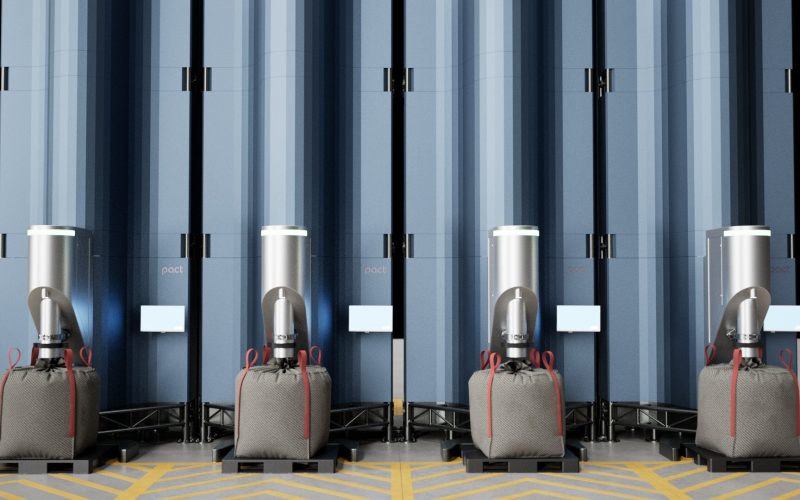
Infrastructure innovator Endeavour has unveiled Pact, a scalable technology designed to provide the gigawatt-scale, 24/7 clean power required by AI cloud providers. The system utilises methane cracking to co-produce hydrogen fuel and high-quality graphite, offering a carbon-neutral energy source that remains cost-competitive with conventional fossil fuels.
Operating as a closed-loop system, Pact passes natural gas or biomethane through a low-temperature catalytic reactor. This process separates hydrogen for immediate power generation while sequestering carbon into solid graphite, preventing atmospheric release. According to the company, the resulting hydrogen maintains a lower lifecycle greenhouse gas footprint than electrolysis-based “green” hydrogen.
“There have been few low-carbon options that can be deployed quickly at the scale and cost needed for AI campuses and heavy industry. The Pact system fills that gap,” said Jakob Carnemark, CEO and founder of Endeavour. He noted that the technology provides clean fuel for data centers while transforming captured carbon into “critical materials for trillion-dollar industries that have historically been difficult to decarbonise.”
The system has undergone rigorous testing alongside manufacturing partner EBNER. Herbert Gabriel, Managing Director of EBNER, described the launch as an “important milestone” that overcomes the scalability challenges typical of electrolysis. By converting gaseous carbon into solid materials like graphite for semiconductors and low-carbon concrete, the technology can function as a net carbon-negative energy source when displacing energy-intensive imports.
Designed for modularity, Pact can be coupled with power generators to produce fuel “just-in-time,” eliminating traditional hydrogen storage and transport hurdles. The system’s footprint is scalable to support installations ranging from 5 MW to over 1,000 MW. As Pact Chief Technology Officer and inventor Juzer Jangbarwala explained, the system creates a “foundation for a carbon materials platform” rather than treating carbon as a waste product to be stored.