







Mast Reforestation has announced the total sell-out of its first biomass burial carbon removal credits from the MT1 project in southern Montana, less than six weeks after their issuance. High-profile buyers including Bain & Company and BMO have joined early participants such as Royal Bank of Canada (RBC) and Muir AI in purchasing all 4,277 credits from the pioneering post-wildfire restoration site.
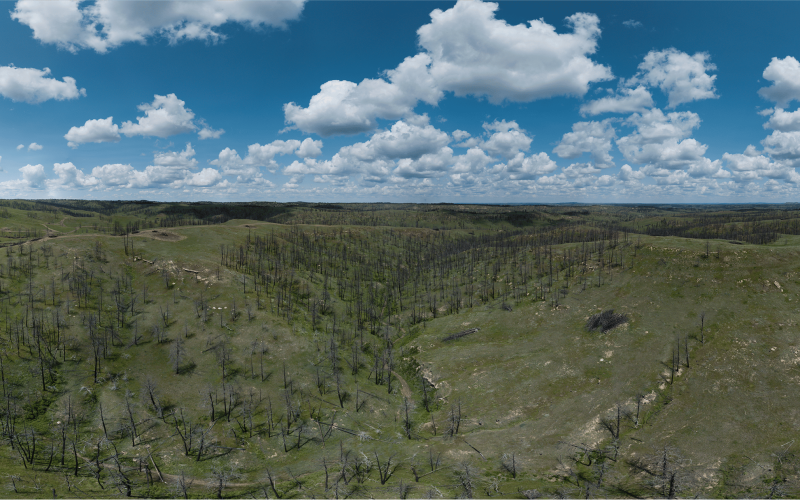
The MT1 project achieved one of the fastest development timelines globally, moving from construction to issuance in just nine months. Under the Puro.earth registry, the project involved burying over 10 million pounds of wildfire-killed timber in an engineered underground chamber, preventing the immediate release of carbon that would have occurred through traditional pile-burning. The resulting credits carry an ‘A’ rating from BeZero Carbon, a distinction held by fewer than 8% of non-nature-based removal projects.
Revenue from these sales is being immediately channelled into ecosystem recovery. Reforestation efforts begin today, 15 April, with the planting of 6,000 native conifer seedlings in an area where the 2021 Poverty Flats Fire had made natural regeneration nearly impossible.
“High-integrity carbon removal is an important part of Bain’s strategy to address residual emissions while helping scale the climate solutions the world needs,” said Sam Israelit, Partner and Chief Sustainability Officer at Bain & Company. “Mast’s MT1 project stood out for combining durable carbon removal with meaningful post-wildfire recovery.”
Michael Torrance, Chief Sustainability Officer at BMO, added: “We are pleased to support solutions like this, which demonstrate how high-integrity carbon removal can also support recovery in wildfire-affected regions.”
Mast Reforestation, recently named one of Fast Company’s Most Innovative Companies of 2026, views the rapid sell-out as proof that biomass burial is a bankable infrastructure solution. The company has identified millions of tonnes of eligible burned biomass in Montana alone and aims to deploy 150,000 tonnes of removal annually by 2030.
“This delivery and sell-out timeline shows that durable carbon removal can be delivered in months, not years,” said Grant Canary, CEO of Mast Reforestation. “The revenue from sales is now funding restoration on the ground. This is how durable carbon removal becomes investable infrastructure.”