





The 71st Council of the Global Environment Facility (GEF) concluded its meetings in Samarkand, approving $232.5 million in new financing across 24 projects in 22 countries. Operating alongside the Least Developed Countries Fund and Special Climate Change Fund (LDCF/SCCF) and the Global Biodiversity Framework Fund (GBFF), the decisions establish the framework for international environmental funding through to 2030.
The approved financial package is distributed across three main pillars:
- GEF Trust Fund: $144.3 million allocated to 16 projects, which is projected to leverage over $828 million in co-financing. The funds support biodiversity ($60.3 million), land degradation ($29.3 million), international waters ($26.5 million), climate change ($14.3 million), and blended finance ($13.9 million) across 19 countries.
- LDCF/SCCF: $67.7 million granted to eight projects focused on climate adaptation, flood risks, and disaster preparedness in vulnerable nations.
- GBFF: $20.5 million assigned to two biodiversity conservation projects, with 39 per cent of the programming designated for Indigenous Peoples and local communities.
An additional $200 million was acknowledged for smaller-sized projects approved earlier this year to tackle persistent organic pollutants and mercury use in artisanal gold mining.
The Council reported that current GEF-8 performance metrics have exceeded several key targets:
- Ocean protection: Reached 1.9 billion hectares against a 100-million-hectare goal.
- Emissions: Reduced 2.3 billion tonnes of greenhouse gases against a 1.9-billion-tonne target.
- Ecosystems: Restored 10.1 million hectares of land and improved cooperation in 59 shared water ecosystems.
Representatives from 186 member countries also endorsed the $3.9 billion ninth replenishment cycle (GEF-9), running from July 2026 to June 2030. The upcoming cycle introduces structural reforms to accelerate resource delivery. Key targets include directing 35 per cent of resources to Least Developed Countries (LDCs) and Small Island Developing States (SIDS), and allocating $100 million directly to an Indigenous Peoples and local communities Conservation Initiative.
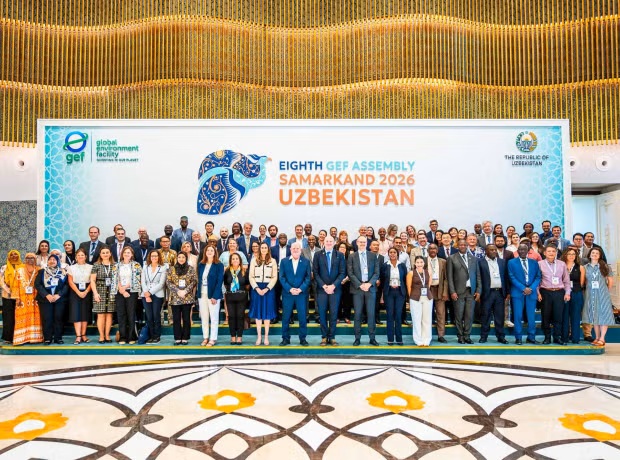
During the sessions, the Rob Walton Foundation partnered with the GEF to help African governments raise up to $50 million for 162 Keystone Protected Areas. Concurrently, the GBFF adopted a new resource mobilisation strategy to increase contributions from philanthropic and private sectors. The event precedes the quadrennial Eighth GEF Assembly opening on 4 June.