






Carbon certification standard Gold Standard has published Production and Application for the Removal of Carbon via Biochar (PARC), its inaugural carbon dioxide removal (CDR) methodology for biochar projects.
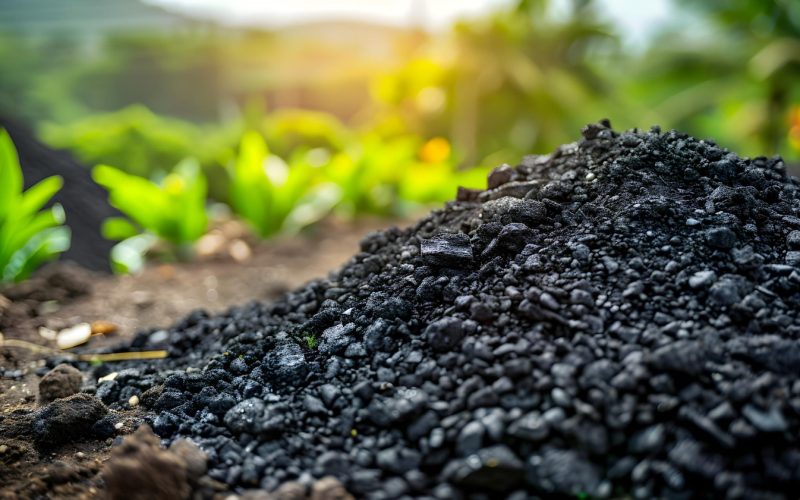
The framework establishes standardized carbon accounting and environmental safeguards for biochar projects across various operational scales, requiring carbon storage durability for a minimum of 200 years. Biochar, produced by pyrolysing or gasifying sustainably sourced biomass in low-oxygen environments, locks atmospheric carbon into stable matrix structures that can be applied to agricultural soils, building materials, or geological storage. Under the PARC framework, only net carbon removals are eligible for crediting, explicitly excluding avoided emissions from alternative biomass baseline uses.
The methodology introduces a three-tiered compliance framework designed to accommodate diverse production scales while maintaining consistent durability, eligibility, and net-accounting requirements:
- Track 1 (Distributed): Designed for manual or semi-manual kilns processing under one tonne of dry biomass daily per unit, managed through centralized aggregators with annual activity caps set at 60,000 tonnes of CO₂ equivalent.
- Track 2 (Mechanised): Tailored for mid-scale facilities processing between 1 and 15 tonnes of dry biomass daily, requiring direct input weighing.
- Track 3 (Industrial): Mandatory for large-scale facilities processing over 15 tonnes daily, requiring continuous emissions monitoring systems and laboratory batch analysis.
To ensure environmental integrity, net removal calculations incorporate deductions for biomass harvesting, transportation, processing emissions, leakage, and model uncertainty. Projects must achieve a minimum net efficiency ratio of five units of stored CO₂ for every one unit of operational CO₂ emitted to receive credit issuances. Additionally, projects must contribute to a buffer pool or apply a minimum 2.5 per cent risk deduction to mitigate potential carbon reversal.
Feedstock sourcing guidelines cover six categories—including agricultural and processing residues, invasive species clearance, disaster debris, and purpose-grown biomass on degraded land. Purpose-grown energy crops and municipal organic wastes are restricted exclusively to Track 3 industrial operations, while biochar utilization for fuel or landfill disposal is barred.
Margaret Kim, Chief Executive Officer of Gold Standard, stated that realizing biochar’s global removal potential relies on scalable, mathematically sound methodologies. Kim added that PARC provides a structured participation pathway for both distributed smallholder networks and enterprise industrial plants while verifying long-term carbon storage permanence.
Gold Standard confirmed that the PARC methodology aligns with Article 6.4 baseline requirements under the Paris Agreement, incorporating transparent downward adjustment factors upon credit issuance.