









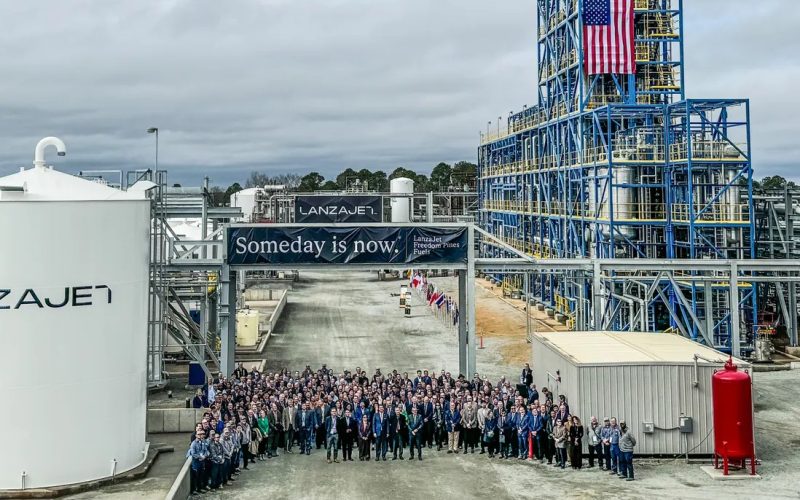
Sustainable fuels technology provider and producer LanzaJet, Inc. has secured at least $20 million in fully committed new financing to advance operational scaling at its Freedom Pines Fuels facility in Soperton, Georgia.
The initial funding tranche closed on 14 October, with full transaction closing anticipated by December 2026.
The capital injection is supported by LanzaTech Global, Inc. (NASDAQ: LNZA), venture capitalist Vinod Khosla, and the LanzaJet Board of Directors as part of a broader corporate recapitalisation and balance-sheet deleveraging.
Under the terms of the transaction, parent firm LanzaTech will substantially increase its equity stake in LanzaJet to accelerate commercial production.
Key operational milestones and technology capabilities include:
- Commercial facility operations: Freedom Pines Fuels represents the world’s first commercial-scale alcohol-to-jet (ATJ) production plant, maintaining an annual capacity of 10 million gallons of ASTM-certified sustainable aviation fuel (SAF) and renewable diesel.
- Feedstock flexibility: The proprietary ATJ process converts ethanol derived from varied regional sources, including US and Brazilian agricultural ethanol alongside waste-carbon streams processed via LanzaTech’s gas fermentation platform.
- Compliance alignment: Supports low-carbon and waste-derived fuel mandates across international markets, including the European Union and the United Kingdom.
- Executive leadership alignment: Dr Jennifer Holmgren, Chief Executive Officer of LanzaTech, continues as Chair of LanzaJet and steps into the role of interim CEO to guide commercial operations.
Dr Jennifer Holmgren stated that LanzaTech’s expanded ownership stake and recapitalised balance sheet will allow the company to drive commercial operations at Freedom Pines Fuels while deploying its ATJ technology platform across future international production sites.
The investment comes as global airlines face tightening regulatory mandates and voluntary targets to integrate low-carbon alternatives into commercial fuel supplies.