








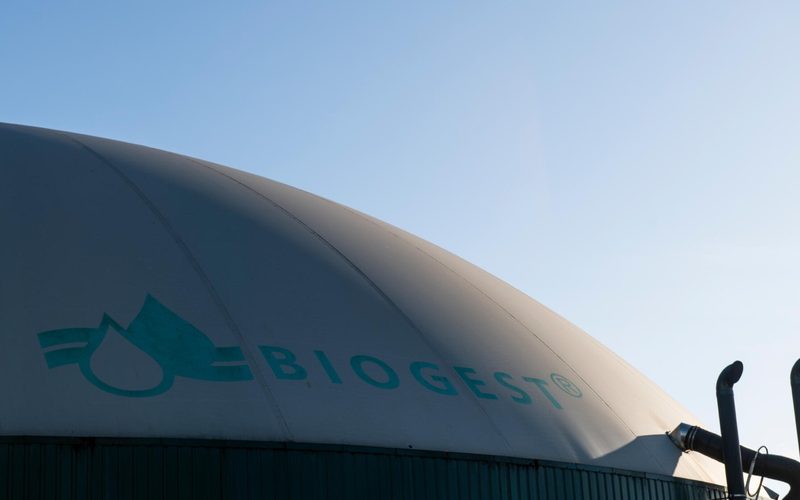
French energy group ENGIE and global shipping operator CMA CGM have announced a strategic joint venture to construct a large-scale biomethane production plant in the industrial-port zone of Le Havre, France.
ENGIE will lead the project’s technical design, permitting, construction, and long-term operations, while CMA CGM will take a minority equity stake in the facility via PULSE, its dedicated energy transition investment fund.
Scheduled to begin operations between 2029 and 2030, the plant will convert livestock waste, household biowaste, and agricultural residues into renewable biomethane.
The produced biomethane will be injected into the European gas grid and supplied to CMA CGM’s dual-fuel container fleet under a certified mass-balance system, supporting low-carbon maritime transport.
Key technical specifications and strategic targets include:
- Emissions reduction: Biomethane utilization reduces full life-cycle greenhouse gas emissions by at least 67 per cent compared to standard marine fuels and can be used directly by existing liquefied natural gas (LNG) vessels.
- Agricultural by-products: Annual production will generate 100,000 tonnes of organic digestate for local agricultural fertilizer, along with 13,000 tonnes of recovered biogenic carbon dioxide for industrial commercialization.
- ENGIE capacity target: Advances ENGIE’s broader corporate target of reaching 10 terawatt-hours (TWh) of annual European biomethane production capacity by 2035, up from 1.2 TWh.
- CMA CGM fleet expansion: Aligns with CMA CGM’s strategy to deploy more than 200 dual-fuel vessels capable of operating on biomethane, biomethanol, and synthetic e-fuels by 2030, supporting its 2050 net-zero target.
Catherine MacGregor, Chief Executive Officer of ENGIE, stated that cross-sector industrial partnerships are vital to scaling renewable gas infrastructure and decarbonising hard-to-abate global transport sectors.
Rodolphe Saadé, Chairman and Chief Executive Officer of the CMA CGM Group, added that securing long-term renewable fuel supply chains at major European shipping hubs like Le Havre reinforces energy sovereignty and supports fleet decarbonisation.
The partners indicated that the Le Havre project serves as a model for further joint biomethane developments currently under consideration across France and Europe.