








Major international financial institutions continue to direct hundreds of billions of dollars toward companies linked to tropical deforestation, ecosystem degradation, and human rights violations, according to a report released by the Forests & Finance coalition.
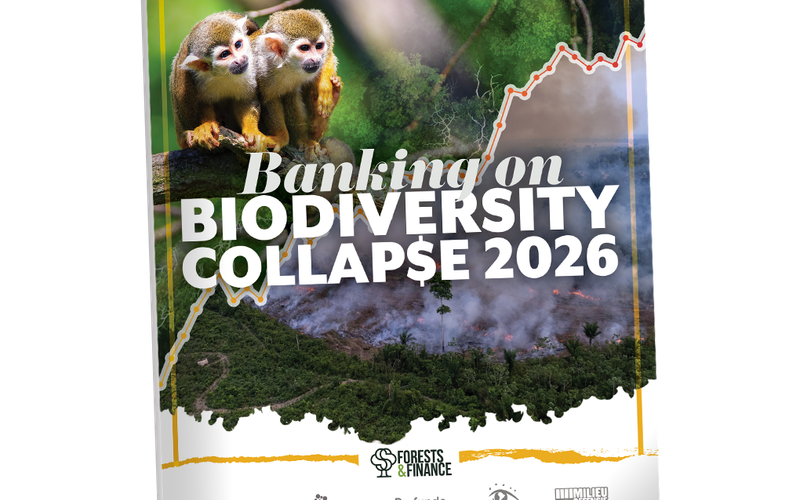
Published during the UN Principles for Responsible Investment (PRI) conference in Amsterdam ahead of the UN Biodiversity Conference (COP17) in Armenia, the report, titled Banking on Biodiversity Collapse 2026, marks the coalition’s largest global analysis of nature-related financial risks.
For the first time, the annual research expanded its scope to include metal and mineral mining across tropical forest basins—driven by expanding demand for nickel, lithium, cobalt, and copper—as well as coffee and cocoa supply chains.
Key financial metrics and findings from the study include:
- Agro-commodity financing: Banks extended $531 billion in credit to companies operating in high-risk tropical agricultural sectors between 2016 and 2026.
- Mining capital allocation: The coalition documented $363 billion in bank financing for tropical metal and mineral mining over the same ten-year period.
- Safeguard policy deficits: The average policy score for financial institutions covering forest-risk commodities remains at 25 per cent, highlighting gaps in formal human rights and environmental risk management frameworks.
- Regional risk drivers: Highlighted ongoing capital flows to Brazilian soy traders following the breakdown of the Amazon Soy Moratorium, alongside plantation models in Indonesia linked to peatland drainage and regional fire hazards.
- Energy transition supply risks: Warned that unmonitored mining expansions for critical minerals and artificial intelligence infrastructure threaten tropical ecosystems under the umbrella of green transition investments.
Stephanie Dowlen, Senior Forest Campaigner at Rainforest Action Network, stated that financial institutions must address the accountability gap by aligning capital flows with long-term ecological stability rather than destructive resource extraction.
Merel van der Mark, Coordinator of the Forests & Finance Coalition, added that voluntary corporate policies have proven insufficient to meet the alignment targets set under the Kunming-Montreal Global Biodiversity Framework.
The coalition called on governments attending CBD COP17 to establish mandatory due diligence regulations for financial institutions, enforce No Deforestation, No Peat, No Exploitation (NDPE) standards, and increase legal accountability for corporate supply-chain violations.