









Singapore, 6 November 2026 — Buyers are rapidly integrating sustainability data into procurement, but many suppliers still lack the capabilities — and commercial incentives — needed to keep pace, according to discussions at the inaugural EcoVadis Roundtable Singapore.
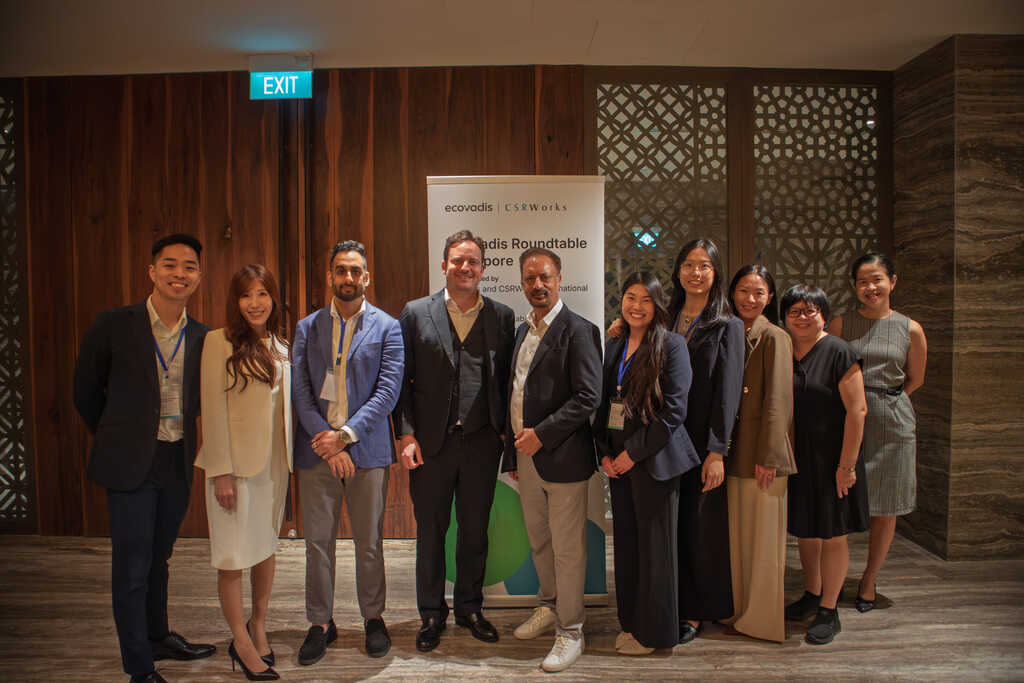
Co-organised by EcoVadis and CSRWorks International at Grand Hyatt Singapore on 5 November, the roundtable brought together buyers, suppliers and sustainability professionals to examine sustainable procurement, supplier engagement and the business case for more resilient supply chains.
Richard Bourne, Senior Vice President, APAC at EcoVadis, told participants that the gap between buyer expectations and supplier capabilities is becoming increasingly apparent.
Data presented by Bourne showed that 98% of buyers have begun embedding supplier ESG data into procurement, while 80% of rated companies still lack a documented supply-chain risk analysis. Around 30% of suppliers provide no carbon data.
“Commitment is no longer the gap. Capability is,” was a central message of his presentation.
Bourne also highlighted the business case for supply-chain resilience. Research cited from Accenture found that companies with higher resilience maturity recorded 3.6% higher revenue growth and an additional 1.2 percentage points in EBIT margin compared with less resilient peers. The presentation cautioned, however, that the findings show an association rather than establishing resilience as the sole cause of stronger financial performance.
Engagement linked to stronger performance
A recurring theme was that assessments alone are unlikely to drive supplier improvement without sustained engagement.
EcoVadis data presented at the event showed that companies completing their first rating in 2025 had an average score of 51.5, compared with 59.9 for companies completing two or more ratings. Companies participating in the EcoVadis network for more than 10 years averaged 63.2.
Bourne noted that the comparison should not be interpreted as proof that repeated assessment alone causes higher scores, but said the data points to the importance of sustained engagement and acting on assessment findings.
The discussion also highlighted a significant incentive gap. While 51% of suppliers surveyed by EcoVadis said linking sustainability performance to commercial outcomes would help accelerate their efforts, only 17% felt their customers currently provided meaningful incentives.
Rajesh Chhabara, Managing Director of CSRWorks International, said this was an important issue for procurement organisations to address.
“Assessments are useful, but real improvement takes time, investment and management commitment. Buyers can do more to recognise that effort through their procurement decisions. Suppliers need a business case for investing in sustainability too,” Chhabara said.
“Sustainable procurement works better when buyers and suppliers work together.”
Moving beyond the scorecard
The roundtable also examined how companies can translate assessment findings into practical improvements.
CSRWorks International presented a session titled “Beyond the Scorecard: Practical Ways to Strengthen Your EcoVadis Performance”, while two fireside discussions brought corporate experience into the conversation.
The first fireside chat, moderated by Bourne, examined how EcoVadis can support procurement, risk management and supplier engagement. The panel featured Gineve De Kock, Global Director, Equipment Projects at Tetra Pak, and Cheryl Ang, Global Purchasing – Sustainability at Henkel.
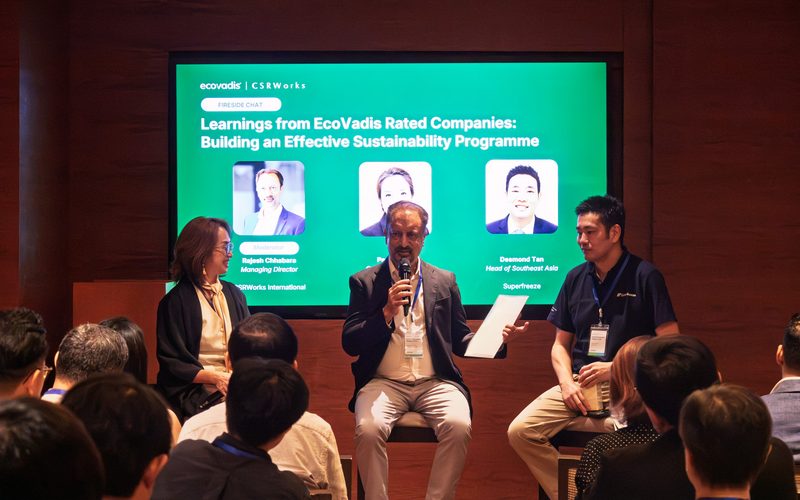
A second fireside chat, moderated by Chhabara, brought together representatives from Tri-Wall Asia and SuperFreeze to discuss their experiences as EcoVadis-rated companies. The conversation covered challenges encountered during the assessment journey, factors that helped improve performance, using EcoVadis to drive improvements beyond the rating, and the challenge of sustaining strong performance over time.
The discussions pointed to a broader shift in sustainable procurement — from collecting supplier data to using it to drive improvement, manage risk and strengthen supplier relationships.
For buyers, that means going beyond asking suppliers to complete assessments. It also requires building supplier capability and recognising sustainability progress through procurement and commercial decisions.
For suppliers, sustainability performance is increasingly becoming part of how customers assess risk, resilience and long-term business relationships.
The Singapore event marked the first edition of the EcoVadis Roundtable series, with plans to extend the format to other markets.