






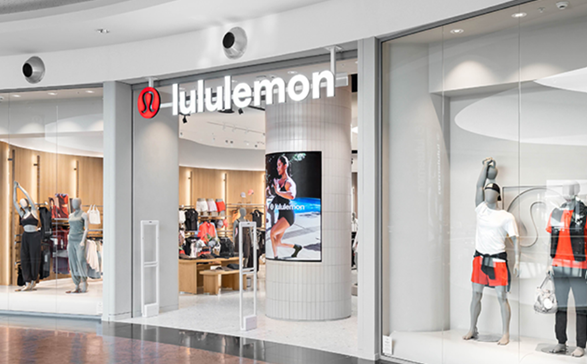
Athletic apparel retailer Lululemon has announced a strategic investment in a specialised renewable energy fund managed by Schroders Capital’s infrastructure team. The capital deployment is engineered to accelerate the construction of wind and solar assets across mainland China, creating a scalable mechanism to decarbonise the company’s manufacturing supply chain.
The investment model allows Lululemon to pool clean energy demand to finance utility-scale infrastructure. Based on projected 2030 production volumes, the fund’s capacity additions are expected to generate the equivalent of 100 per cent renewable electricity across Lululemon’s shared Tier 1 and fabric supplier network in China.
The fund, which receives technical advisory support from clean energy asset manager Schroders Greencoat, focuses on late-stage development and active construction phases of regional wind and solar projects. Initial capital allocations have already been deployed across multiple wind infrastructure installations in China, with completion and grid connection scheduled for later this year.
The operational overhaul directly addresses Lululemon’s Scope 3 supply chain footprint, which represents the largest segment of the apparel industry’s environmental impact. The initiative forms a core pillar of the retailer’s Impact Agenda 2030, which mandates a science-based 60 per cent intensity reduction in greenhouse gas emissions against a 2018 baseline. By utilising an intensity metric, the target requires Lululemon to decouple its absolute supply chain emissions from its broader corporate revenue growth.
To support the technical transition of its overseas factories, Lululemon has integrated the fund’s activities with its existing environmental partnerships. The company currently collaborates with the Apparel Impact Institute, the Asia Clean Energy Coalition, and the Clean Energy Procurement Academy to train manufacturers and scale green procurement standards across shared industrial hubs.
By proving the commercial viability of this cross-border infrastructure investment model, the enterprise aims to establish a repeatable framework for other multinational
Noel Kinder, Senior Vice President of Sustainability at Lululemon, commented, “Decarbonising global supply chains requires new ways of thinking—about capital, collaboration, and scale. This fund demonstrates how companies can pool demand for renewable energy, reduce complexity, and accelerate project development. As we work toward our climate goals, this investment creates a scalable pathway to bring more renewable energy to manufacturing regions where it can have the greatest impact—while contributing to a model that others can build on.”