






E-commerce and cloud computing giant Amazon has reinforced its position as one of the world’s foremost corporate buyers of carbon-free energy, following the latest benchmark report from BloombergNEF. The company’s total clean power portfolio now exceeds 40 gigawatts across more than 700 projects in 28 countries, generating electricity equivalent to the annual consumption of more than 12 million American households.
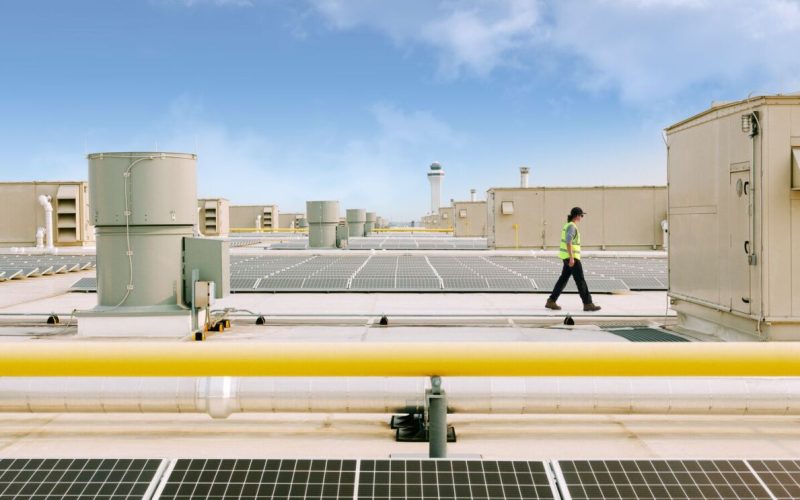
The expanding portfolio encompasses over 300 utility-scale solar and wind farms, 300 onsite solar installations, six European offshore wind developments, 11 utility-scale battery storage facilities, and four agreements focused on nuclear power. By contracting new projects, the technology firm aims to supply its operations whilst adding generation capacity directly to regional electricity networks.
A key focus of Amazon’s long-term energy strategy is the development of next-generation nuclear technology to supply continuous baseload power for expanding digital infrastructure and artificial intelligence workloads. In Washington state, an agreement with Energy Northwest will support four advanced small modular reactors (SMRs) providing an initial 320 megawatts, with potential expansion to 960 megawatts. Additionally, the company has committed 500 million US dollars to X-Energy to help advance more than five gigawatts of new nuclear capacity in the United States by 2039.
To address the intermittent nature of solar and wind power, Amazon is also deploying intelligent battery storage systems. At its Baldy Mesa project in California, machine learning algorithms analyze operational data in real time to determine optimal energy storage and release schedules, helping stabilize local supply during period of high grid demand.
In addition to procurement, the firm highlighted operational efficiency gains within its Amazon Web Services data centres. Global power usage effectiveness (PUE) reached 1.15 in 2024, outperforming traditional corporate server facilities. Concurrently, global water usage effectiveness (WUE) improved by 17 per cent year-on-year to 0.15 litres per kilowatt-hour, supporting Amazon’s broader commitment to become water positive by 2030 and reach net-zero carbon operations by 2040 under The Climate Pledge.