






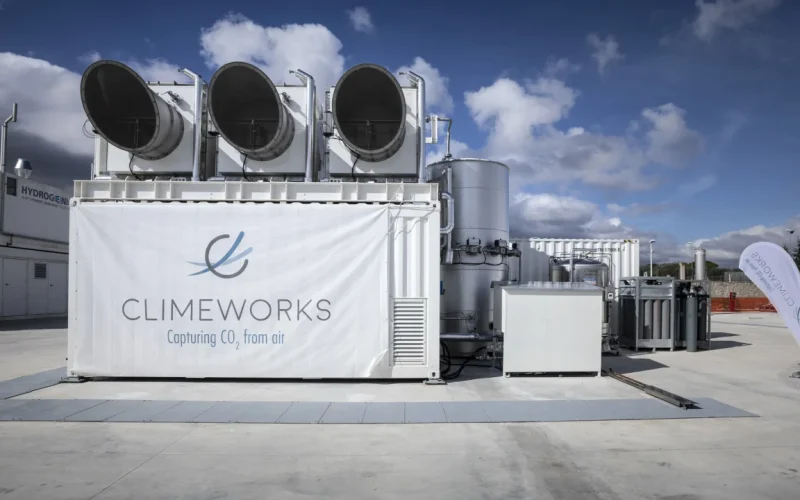
Climeworks, a direct air capture (DAC) company, has announced plans to reduce its workforce in response to mounting uncertainties in the global climate sector. The decision, confirmed in a joint statement by co-CEOs Christoph Gebald and Jan Wurzbacher, reflects the company’s need to remain resilient amidst shifting macroeconomic conditions and evolving policy landscapes that appear to deprioritise carbon removal.
In a statement released this week, the executives cited several factors influencing the decision, including the dynamic macroeconomic environment, unpredictable climate policy direction, and the delayed status of Climeworks’ DAC facility in the United States. “To ensure Climeworks remains resilient through today’s global challenges and able to lead toward a gigaton-scale future, we are planning to reduce the size of our team,” the statement reads.
While Climeworks remains the best-funded scale-up in the DAC space, the company noted that it must exercise prudence in managing its capital. The announcement comes at a turbulent time for the carbon removal industry, which has been plagued by high costs, inconsistent regulatory backing, and a scarcity of new credit buyers.
In March 2025, reports suggested the U.S. Department of Energy was considering withdrawing support for two of the country’s largest DAC projects — Project Cypress and the South Texas DAC Hub — both initiated under a previous administration. Industry sources have indicated that these initiatives may be at risk of cancellation as federal priorities shift.
Despite progress from major corporate players like Microsoft and Google, the sector as a whole continues to struggle with attracting broader investment. High per-ton removal costs and regulatory uncertainty have made it difficult to build the commercial momentum necessary for large-scale deployment.
Climeworks, however, is pushing forward with technical innovation. The company’s new Generation 3 DAC technology aims to significantly cut costs, targeting a reduction of $250–$350 per tonne of CO₂ captured and achieving net removal costs of $400–$600 per tonne by 2030.
Looking ahead, Gebald and Wurzbacher remain confident in the company’s long-term mission. “We are in to win this challenge. We will double down on what we stand for: highest quality carbon removal, taking our core technology to the next level to drive long-term value, ensuring we stay the undisputed tech leader and at the forefront of innovation.”