



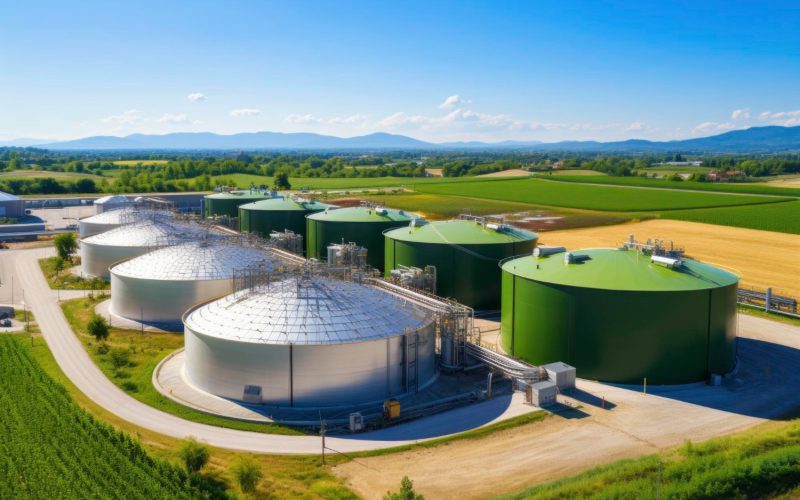
A delegation from the Foreign Affairs Committee of the European Parliament has concluded an official site visit to the Bio2Watt Energy Holdings biogas facility in Bronkhorstspruit, South Africa. The facility serves as a flagship project under Global Gateway, the European Union’s capital deployment strategy aimed at financing clean technology, renewable energy, and strategic infrastructure across emerging markets.
The Bronkhorstspruit Biogas Project (BBP) stands as South Africa’s initial industrial-scale waste-to-energy facility, processing roughly 240,000 tons of organic waste annually. The utility-scale plant delivers green baseload power to more than 26,000 residents in surrounding communities, alongside supplying heavy industrial off-takers including premium automaker BMW and South African Breweries (SAB), a subsidiary of AB InBev.
To finance the project, the European Union partnered with blended finance fund manager Climate Fund Managers (CFM). A combined commitment of over ZAR 635 million (USD 38.5 million) drawn from CFM’s Climate Investor ONE and Climate Investor TWO funds—which incorporates a direct EU capital contribution—has enabled Bio2Watt to consolidate its broader regional project pipeline into a ZAR 3.75 billion (USD 227 million) investment framework.
David McAllister (MEP), Chairperson of the European Parliamentary Foreign Affairs Committee, highlighted the strategic integration of the asset, stating: “Bio2Watt has made a remarkable impression on me. It is a concrete, high-visibility example of the EU’s Global Gateway in action in that it demonstrates how climate finance and public-private partnerships converge to promote shared values and common interests. Beyond the significant benefit to local communities and the environment, of particular interest has been BMW South Africa’s involvement from the outset in the establishment of the biogas facility to provide its Rosslyn plant north of Tshwane with renewable baseload power. Circular economy is all about partnerships to effectively keep products and materials in circulation for as long as possible while at the same time minimising waste and resource use.”
Operating as a critical infrastructure model within South Africa’s Just Energy Transition partnership, the project provides a reliable alternative to intermittent solar or wind assets by injecting predictable baseload electricity directly into the grid. Environmentally, the facility prevents the emission of 48,000 tons of carbon dioxide equivalent ($CO_2e$) per year, an offset comparable to roughly 120 million kilometres of passenger vehicle travel.
The commercial structure of the plant also established the regulatory precedent for municipal grid wheeling in South Africa via its landmark supply agreement with BMW’s Rosslyn manufacturing site. This arrangement allows the European automotive manufacturer to advance its global net-zero targets and bypass domestic grid constraints while supporting local manufacturing employment.
By converting agricultural waste into electrical energy and organic fertilizer, the plant assists local municipalities in achieving mandatory landfill-diversion targets and protecting local groundwater tables from agricultural runoff. Furthermore, the operational model establishes long-term industrial employment opportunities within peri-urban areas affected by high structural unemployment.
Following the success of the Bronkhorstspruit facility, Bio2Watt intends to replicate the scalable infrastructure blueprint internationally, with advanced planning already underway to expand operations into Mozambique and Uganda.