






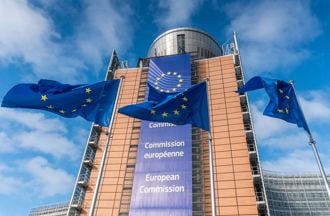
The International Air Transport Association (IATA) has called for an urgent review of the European Union’s Emissions Trading System (EU ETS), warning that current regulations threaten Europe’s air connectivity and economic resilience.
The trade body argues that the policy must be reformed to bolster the industry’s global competitiveness while navigating the transition to net-zero emissions.
IATA’s proposal focuses on four “critical levers” to align climate goals with industrial stability:
- Full CORSIA implementation: IATA is demanding that the EU fully adopt the UN’s global offsetting scheme (CORSIA) for all international flights, including those within the European Economic Area. It warns that layering regional EU rules over global standards creates “redundant costs” and administrative complexity.
- A SAF ‘Book-and-Claim’ system: To make Sustainable Aviation Fuel (SAF) more accessible, IATA advocates for a system allowing airlines to claim environmental credits based on purchase records, even if the fuel is not physically available at their specific departure airport.
- Revenue reinvestment: Following the 2024 phase-out of free carbon allowances, IATA is calling for billions in EU ETS revenues to be diverted back into the sector. This funding is seen as essential for scaling SAF production and developing zero-emission technologies.
- Competitive balance: The association urges policymakers to safeguard the industry from a “sudden spike” in compliance costs, which could limit consumer choice and divert capital away from green investments.
The call for a review follows the Draghi Report, which identified high regulatory costs and underinvestment as major barriers to EU economic strength. IATA Director General Willie Walsh stated: “European aviation policy must bolster competitiveness as it advances decarbonisation… Reviewing the EU ETS offers a critical opportunity to refocus efforts on cost-effective emission reductions.”
Between 2026 and 2030, the aviation sector is expected to surrender nearly 330 million allowances, generating significant revenue for Member States. However, IATA points out that current incentives, such as the SAF Allowance scheme, are only projected to meet 4–5% of the industry’s total needs, leaving a massive funding gap for the estimated €60 billion required for SAF infrastructure by 2035.
By harmonising climate policy with international standards, IATA believes the EU can protect its integration and trade while meeting its 2050 environmental targets.