



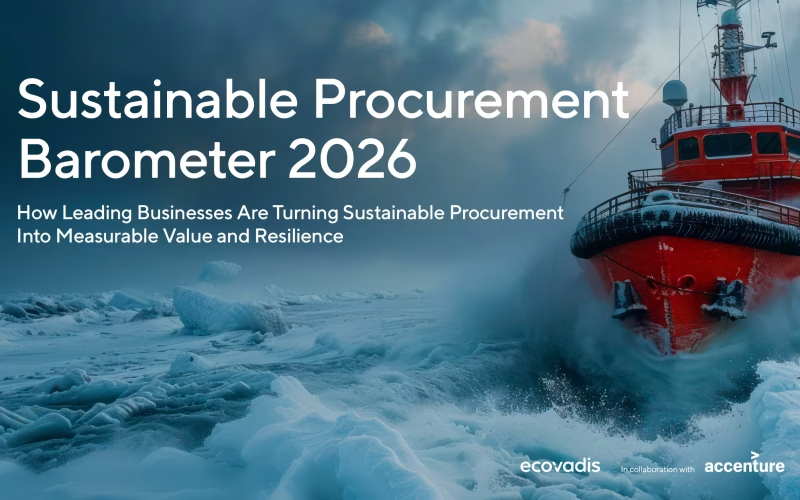
The 2026 Sustainable Procurement Barometer, published by EcoVadis in collaboration with Accenture, reveals a fundamental shift in corporate strategy: top-performing organisations are now generating higher returns from innovation than from mere regulatory compliance. According to the report, 80% of “leader” organisations — the top 10% of performers — cite innovation as the primary driver of ROI in their sustainable procurement programmes, compared to 54% of other companies.
The findings indicate that procurement teams are increasingly moving beyond basic box-ticking. Instead, they are prioritising value creation through circular products, resource efficiency, and supplier-driven innovation. Currently, 58% of organisations run innovation initiatives across a significant portion of their supplier spend, a massive leap from just 9% in 2024.
“The question is no longer whether to invest in sustainable procurement. It is how to make it deliver measurable business results,” said Pierre-François Thaler, Co-Founder and Co-CEO of EcoVadis. “The leaders are using sustainability data to make everyday sourcing decisions, applying AI to manage risk and performance at scale, and holding suppliers accountable for improvement.”
The AI gap and supply chain resilience
A significant hurdle identified in the report is a growing “digital asymmetry” between buyers and suppliers. While 72% of buyers are now deploying AI for predictive analytics and risk screening, suppliers are lagging in adoption. This gap threatens to obscure visibility into deeper supply chain tiers; while 80% of buyers have visibility into Tier 1 sustainability performance, Tier 2 remains a blind spot for the vast majority.
The stakes for improving this visibility are high. Research from Accenture suggests that supply chain disruptions cost organisations more than $1.6 trillion in lost annual revenue growth. However, companies that build resilient, sustainable supply chains achieve 3.6% higher revenue growth than their peers.
“Many companies now consider sustainable procurement a core driver of business performance,” said Matias Pollmann-Larsen, Global Risk, Resilience and Sustainable Value Chain Lead at Accenture. “Organisations that combine sustainability data with AI are making faster, more informed decisions across their supply chains.”
Strategic priorities: Carbon, labour, and circularity
The Barometer highlights a global convergence around three key pillars:
- Carbon management: Remains the leading strategic priority for 54% of organisations as they chase net-zero targets.
- Labour practices: High standards for the supplier workforce have become a baseline expectation due to tightening due diligence requirements.
- Circularity: A rising focus on resource efficiency as a lever for both sustainability and cost control.
The report is based on a comprehensive survey of 1,000 multinationals and 2,000 suppliers globally. EcoVadis and Accenture will host a dedicated webinar on 6 May to discuss the findings in further detail.