








The United Nations Global Compact and data analytics firm Kantar have launched the UN Global Compact–Kantar CMO Benchmark Study, the first international assessment designed to measure marketing’s progress in driving corporate sustainability transformations.
Grounded in the previously established CMO Blueprint for Sustainable Growth, the study evaluates how global marketing organisations embed sustainability across corporate growth strategies, brand building, product innovation, communications, and external partnerships. The research draws on insights from more than 1,700 senior executives across marketing, sustainability, innovation, and operations, spanning major global regions, industry sectors, and commercial business models.
The findings indicate that while institutional momentum is growing, substantial capability and execution deficits persist across the corporate landscape.
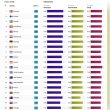
According to the data, 69 per cent of marketing executives believe their organisations are progressing well or are well advanced in integrating sustainability into their marketing agendas. However, the average perceived performance across the blueprint’s 28 distinct benchmark metrics drops to 52 per cent, exposing a clear disconnect between corporate ambition and practical execution.
The research shows that progress remains strongest in operational areas under marketing’s direct control, such as communications, advertising, and media (56 per cent) alongside core brand strategy (54 per cent). Conversely, performance scores drop significantly in areas that mandate cross-functional coordination and broader systems change, including product innovation (50 per cent) and multi-stakeholder collaboration and partnerships (48 per cent).
Sanda Ojiambo, Chief Executive Officer and Executive Director of the UN Global Compact, commented on the structural shifts required by the industry, stating: “This benchmark report gives us that industry-wide picture. It highlights both momentum and critical gaps — and the decisions and capabilities that will move the industry faster and further. The message is clear: sustainable growth is not the future of marketing — it is the mandate today. Brands that lead will build trust, unlock innovation and secure long-term performance.”
Jonathan Hall, Managing Partner of the Sustainable Transformation Practice at Kantar, highlighted the commercial incentives behind the transition, adding: “The impacts of climate change are well understood — and the risk is material. But, within this urgency lies enormous opportunity: sustainability perceptions already contribute as much as 10% of value to the Kantar BrandZ Global Top 100 most valuable brands. And while marketing and sustainability leaders recognise their responsibility and the scale of the opportunity, turning intention into impact requires system change and new ways of working. This benchmark report points to how marketing and sustainability can together create value in ways that benefit both people and the planet.”
The study uncovers significant perception gaps between dedicated sustainability professionals and marketing leaders. While 27 per cent of marketers classify their organisations as well advanced in sustainable transformation, a mere 9 per cent of sustainability professionals concur, indicating a pressing need for unified internal definitions and integrated executive decision-making.
A similar disconnect emerged regarding circular growth models; while nearly 49 per cent of sustainability directors believe profitable corporate growth can be derived via circular business frameworks, only 25 per cent of marketing leaders share that view, indicating that circular economics is not yet widely embraced as a core engine of long-term business innovation.
To close these execution gaps, the report outlines several critical priorities for Chief Marketing Officers, advising organisations to strengthen consumer insight capabilities regarding sustainable behavioural change, integrate sustainability criteria directly into capital investment decisions, and embed environmental performance metrics into corporate governance structures and key performance indicators (KPIs).