








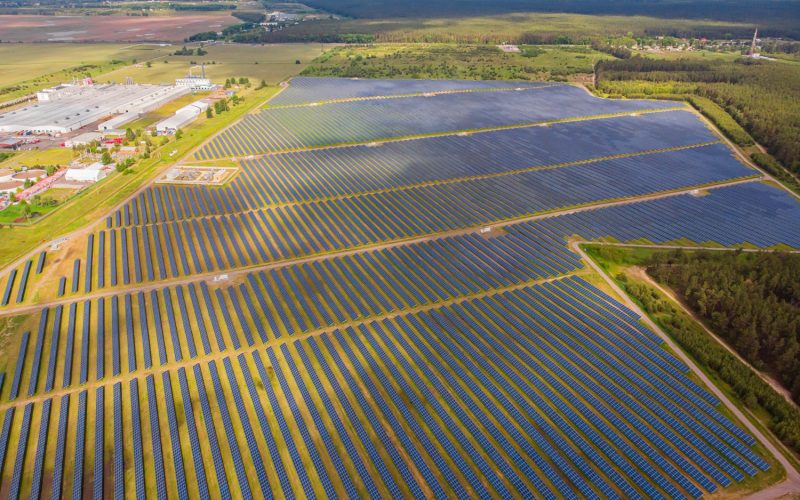
British International Investment (BII), the UK’s development finance institution, has unveiled a new five-year strategy headlined by the launch of British Climate Partners (BCP). The £1.1 billion (USD 1.4 billion) initiative is designed to mobilise private capital at scale to accelerate the energy transition across developing Asian economies, targeting countries with high coal dependency.
The region currently accounts for approximately three-quarters of global coal demand. With South-East Asia and India requiring hundreds of billions of dollars in annual investment to reach net-zero targets, BCP will use equity platforms and mezzanine finance to de-risk projects and attract commercial investors. The programme will focus on India, the Philippines, Indonesia, Vietnam, Thailand, and Malaysia.
“Asia’s energy transition will depend on mobilising private capital at scale,” said Srini Nagarajan, Managing Director and Head of Asia at BII. “British Climate Partners is designed to do exactly that.”
The strategy marks a shift in the UK’s approach to international development, moving away from traditional grants toward long-term investment partnerships. Minister for Development Jenny Chapman noted that BII is central to this vision: “BII sits right at the heart of this approach… I know BII will lead from the front in turning our joint ambitions into genuine results.”
Beyond climate, BII is deepening its commitment to inclusive growth:
- Climate finance targets: At least 40 per cent of all new BII investments will now qualify as climate finance, up from a previous 30 per cent target.
- Frontier markets: At least 25 per cent of new capital will be directed toward Least Developed Countries, such as Nepal, where private investment remains scarce.
- Gender-lens investing: BII intends for 30 per cent of its new core investments to qualify under the 2X Challenge to support women’s economic empowerment.
The institution also plans to pursue “market-level impact” investments, focusing on developing entire sectors rather than individual companies to create systemic economic stability across its target regions.