





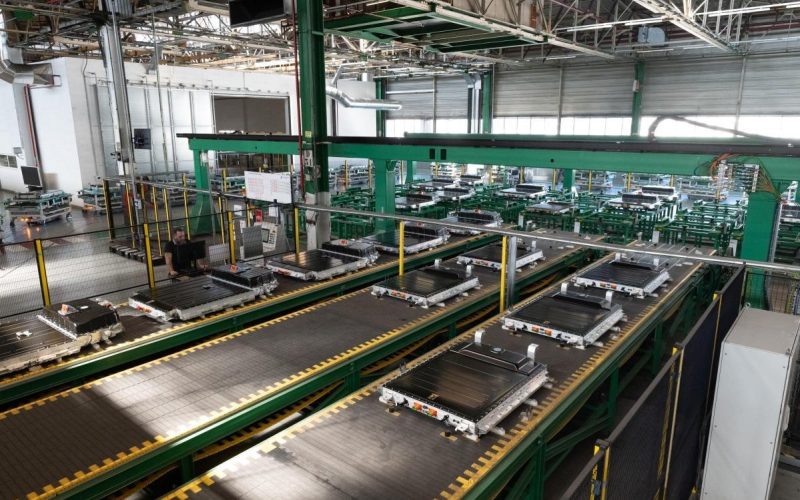
The European Commission has formally adopted Decision C(2026) 3828/2, establishing the new Battery Booster Facility. The initiative will mobilise up to €1.5 billion from the EU Emissions Trading System (ETS) revenues via the Innovation Fund to help battery cell manufacturers scale up industrial production within Europe.
In a structural shift for the executive body, the Commission will provide direct financial support to the sector in the form of interest-free loans rather than traditional non-repayable grants.
The Facility is designed to crowd-in private capital, accelerate manufacturing deployment, and strengthen the European Economic Area’s (EEA) strategic autonomy in clean technologies. To qualify for financial backing, projects must meet strict operational criteria:
- Technology & offtake: Eligible projects must manufacture battery technologies suitable for electric vehicles (EVs), though end-users are permitted to deploy the final products for alternative applications.
- Capacity & location: Facilities must be located within the EEA and possess a minimum planned production capacity of 10 gigawatt-hours (GWh).
- Financing caps: The maximum loan amount is capped at €500 million per project.
The decision to deploy interest-free loans over standard grants was selected to encourage rigorous capital management, accelerate corporate paths to commercial viability, and complement existing private sector investments. Project applications will be assessed based on technical maturity, financial viability, and their broader value to the European economy.
The initiative follows a series of interventions by the Innovation Fund to support the European battery ecosystem. In December 2024, the fund launched a €1 billion call for proposals targeting EV battery cell manufacturing, alongside a €200 million guarantee top-up to InvestEU in partnership with the European Investment Bank (EIB). The concept was formalised in the December 2025 Battery Booster Strategy and underwent public consultation in March 2026.
The Commission plans to launch the official call for proposals in the third quarter of 2026, with an indicative application window of six weeks. The executive body aims to evaluate proposals, award the initial project contracts, and execute the first financial disbursements before the end of 2026.