



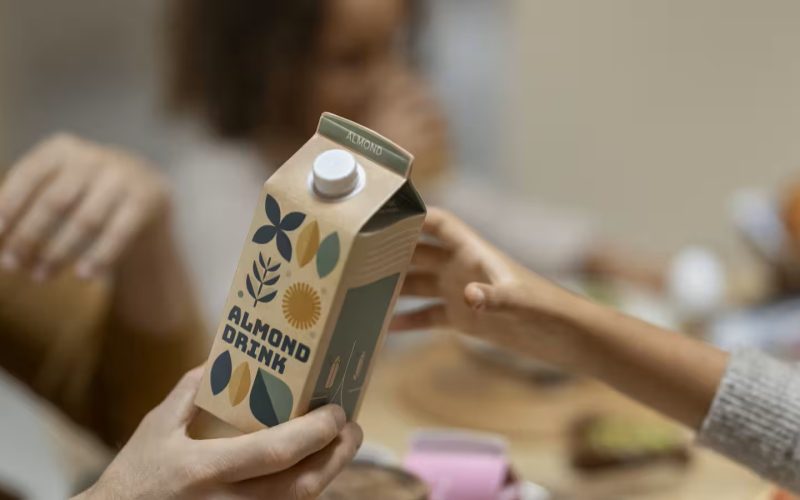
Elopak has commenced the use of low-carbon aluminium, manufactured utilising renewable electricity, across its European carton production facilities. The updated material has been integrated into the company’s standard ambient cartons manufactured at its processing plants in the Netherlands, Denmark, and Ukraine.
The transition to low-carbon aluminium delivers an immediate 8 per cent reduction in the carbon footprint of Elopak’s standard aseptic cartons. Based on cradle-to-gate life-cycle calculations, the emissions profile of a standard aseptic Pure-Pak carton has decreased from 53g to 49g of CO₂ equivalent.
Aluminium serves as a critical component in ambient liquid packaging, providing a barrier against light and oxygen while enabling aseptic sealing. These properties are required to extend product shelf life and mitigate food waste without relying on artificial preservatives.
Emilie Olderskog, Global Head of Sustainability at Elopak, stated that sourcing aluminium produced with renewable electricity allows the company to lower the climate impact of its packaging materials while maintaining the structural properties necessary for food protection. She noted that multiple life-cycle assessments indicate liquid packaging cartons can maintain a lower carbon footprint than alternative plastic packaging formats across various applications.
For supply chains seeking alternative structures, the company also produces the Pure-Pak eSense, an aluminium-free aseptic carton designed for ambient distribution to facilitate further emissions reductions and simplified recycling processing.
Elopak sources its aluminium exclusively from members of the Aluminium Stewardship Initiative (ASI), an organisation that establishes environmental performance and responsible sourcing standards for the metals industry.
The manufacturing shift forms part of a broader decarbonisation strategy within the company’s industrial operations, which currently run on 100 per cent renewable electricity. The initiative follows the company’s 2025 introduction of cartons incorporating recycled polymers, a move intended to align its product portfolio with the upcoming requirements of the EU Packaging and Packaging Waste Regulation (PPWR).