



By Rajesh Chhabara
People risk has spent too long at the margins of corporate reporting.
Companies routinely disclose information on employees, health and safety, diversity, training, community investment, responsible sourcing and philanthropy. Some go further, with more serious reporting on human rights due diligence, stakeholder engagement and supply chain practices. Yet too much of this disclosure still reads like a catalogue of activities rather than a clear account of governance, risk, accountability and business relevance.
That is why the Taskforce on Inequality and Social-related Financial Disclosures, or TISFD, deserves serious attention.
The release of its beta framework should not be seen merely as another reporting initiative in a crowded sustainability landscape. Its more important contribution is that it offers companies and financial institutions a structured way to understand people-related impacts, dependencies, risks and opportunities.
That matters because people-related issues are no longer peripheral to business performance. They shape strategy, operational resilience, reputation, access to capital, legal exposure and long-term value.
There is a reason this area of disclosure has remained difficult. Climate disclosure has the advantage of a dominant metric. Greenhouse gas emissions are complex to calculate, but the language of tonnes of carbon dioxide equivalent is widely understood. Targets can be set. Pathways can be modelled. Progress can be tracked.
People-related issues are different.
A safe workplace, decent work, a living wage, freedom from discrimination, access to remedy, respect for human rights and community trust cannot be reduced to one universal number. These issues are contextual. They are experienced differently by different groups of people. They are shaped by geography, income, gender, age, employment status, vulnerability and power.
But complexity is not an excuse for weak disclosure.
The fact that people-related issues are harder to measure does not make them less material. In many cases, it makes them more important to understand.
A company may have credible climate targets and still face serious disruption if it ignores labour risks in its supply chain. A financial institution may have a sophisticated transition strategy and still be exposed to inequality, social instability or human rights concerns across its portfolio. A business may report strong employee engagement scores and still know little about the lived experience of contract workers, migrant workers, value-chain workers or communities affected by its operations.
The economic cost is no longer theoretical. Gallup estimates that low engagement costs the global economy approximately US$10 trillion in lost productivity, equivalent to 9% of global GDP. That figure alone should challenge the idea that people-related issues are somehow secondary to financial performance.
The problem has not been a lack of activity. Most companies are doing something.
The problem has been a lack of architecture. TISFD begins to address that gap.
One of the strongest features of the framework is its focus on impacts, dependencies, risks and opportunities. Companies are generally more comfortable discussing their impacts on people. They are less used to examining their dependencies on people and social systems. Yet every business depends on workers, skills, communities, customers, suppliers, public institutions, trust and social stability.
These dependencies are often invisible until they are disrupted.
Labour shortages, unsafe working conditions, strikes, community opposition, forced labour allegations, supplier misconduct, weak grievance mechanisms, widening inequality and loss of public trust can all affect operations, reputation, legal exposure and enterprise value.
These risks may not always appear immediately in financial statements. But they can shape financial outcomes over time.
This is where TISFD can make a practical contribution. It encourages companies to ask better questions. Who are the people most affected by our business model and value chain? Where does our business depend on decent work, community acceptance and consumer trust? Which people-related risks could affect our strategy, productivity, reputation or licence to operate? Where could better outcomes for people strengthen resilience and long-term value?
These are not charitable questions. They are business questions.
That distinction matters. Responsible business conduct is not only about being a good corporate citizen. It is about understanding how a company creates, preserves or erodes value through its relationships with people.
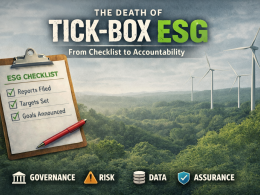
The danger, of course, is that TISFD becomes another reporting checklist. That would be a missed opportunity.
The purpose of any serious disclosure framework should not be to produce longer sustainability reports. It should be to improve decision-making. Better disclosure should be the result of better governance, better strategy, better risk management and better data.
Companies should therefore resist the instinct to ask only: what do we need to disclose?
The better first question is: what do we need to understand?
A company that approaches TISFD as a compliance exercise may map the recommendations, identify gaps and write new text for its annual or sustainability report. That may improve disclosure, but it may not improve the business.
A company that uses TISFD as a diagnostic tool will go deeper.
It will ask whether the board has sufficient oversight of people-related risks. It will test whether management understands the dependencies on people and social systems embedded in the business model. It will examine whether human rights due diligence is active in the value chain or merely described in policy documents. It will review whether grievance mechanisms are accessible, trusted and effective. It will challenge whether existing metrics are meaningful or merely convenient.
That is where the real value lies. TISFD’s promise is that it can help bridge the gap between sustainability practice and financial decision-making.
For too long, people-related performance has often been discussed in two separate languages. One is values-based: human rights, dignity, fairness, inclusion and community well-being. The other is financial: risk, resilience, productivity, reputation and value creation. Both languages matter.
Human rights and decent work matter because people matter. They should not require a financial justification. But companies and investors also need to understand how people-related issues affect business models, risk profiles, operational continuity, capital allocation and long-term returns.
TISFD can help connect these conversations.
It does not replace established human rights frameworks, labour standards, stakeholder engagement practices or sustainability reporting standards. Its value will be greatest if it helps companies bring these elements together in a more coherent way.
That is particularly important as companies navigate an increasingly complex reporting environment. Many are already dealing with GRI, ISSB, ESRS, TCFD, TNFD and human rights due diligence expectations. The last thing businesses need is another isolated reporting universe.
TISFD should therefore be welcomed not as a new layer of bureaucracy, but as a practical bridge. Used well, it can make people-related disclosure more strategic, more decision-useful and more connected to risk and value.
Companies should not wait for final recommendations before acting.
The beta framework should be treated as a readiness tool. It gives companies a timely opportunity to examine whether their current approach to people-related issues is mature enough for the next phase of sustainability reporting, investor scrutiny and stakeholder accountability.
That means mapping impacts, dependencies, risks and opportunities across operations and value chains. It means strengthening board and management oversight. It means integrating people-related risks into enterprise risk management, rather than treating them only as reputational issues. It means improving human rights due diligence, supplier engagement, worker voice, community consultation and grievance mechanisms.
It also means reviewing the quality of people-related data.
The answer is not to create dozens of new indicators. The priority is to identify metrics that are reliable, relevant and connected to the company’s most significant people-related issues. Companies should also be careful with targets. Targets can be powerful when they are grounded in context, evidence and accountability. Superficial targets create only the appearance of progress.
The companies that benefit most from TISFD will not be those that wait for mandatory requirements. They will be the ones that use the framework early to identify gaps before they become controversies, strengthen governance before investors demand it, and connect people-related performance to strategy before it becomes a crisis-management issue.
This is especially important for companies with complex supply chains, large workforces, exposure to vulnerable workers, significant community impacts, consumer-facing brands, infrastructure assets, financial portfolios or operations in markets with higher social risk.
For these companies, TISFD should not be seen as a future reporting obligation. It should be seen as a strategic readiness exercise.
The framework is still evolving. There will be legitimate questions about metrics, proportionality, interoperability and implementation burden. These should be addressed through consultation and practical testing.
But the direction of travel is right.
The future of people-related disclosure should not be more pages of good intentions. It should be better governance, better risk management and better decisions.
That is why TISFD matters.
The author is the Managing Director of sustainability consulting firm CSRWorks International.