







The European Investment Bank (EIB) Group has approved a revised counterparty assessment framework to reduce administrative requirements for businesses, utilities, financial institutions, and public entities seeking financing for green transition projects.
The new framework, designated as PATH 2, replaces the original Paris Alignment for Counterparties guidelines introduced in 2021. Scheduled to take effect in January 2027 as part of the EIB Group’s Climate Bank Roadmap Phase 2, the updated rules eliminate bespoke EIB reporting demands by utilizing climate disclosures already mandated under European Union sustainability and prudential regulations.
Nadia Calviño, President of the EIB Group, stated that removing bespoke reporting requirements will streamline investment approvals and reduce administrative overhead for corporate borrowers, particularly smaller enterprises.
Aligning with the European Commission’s broader administrative simplification agenda, PATH 2 focuses technical evaluations on counterparties exposed to high physical and transition climate risks. High-risk counterparties without existing transition plans will remain required to publish one, with the EIB Group offering fully subsidized technical assistance to support strategy formulation.
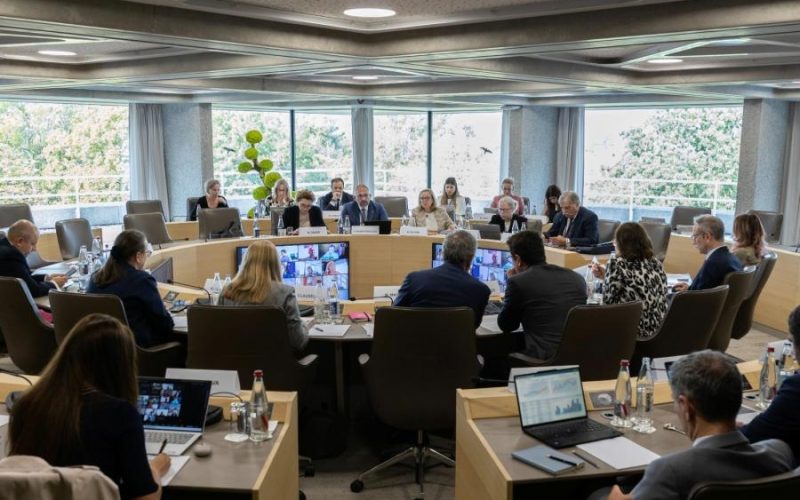
Alongside the policy adoption, the Boards of Directors of the EIB and the European Investment Fund (EIF) approved €11.5 billion in new project financing during meetings in Luxembourg.
The package includes €3.4 billion dedicated to European energy infrastructure, backing grid developments in Germany and Finland, renewable power generation in Italy, and clean-technology innovation across the EU. Additional allocations cover affordable housing initiatives in Poland and healthcare and education infrastructure in France.
Furthermore, the EIF approved a €2 billion securitisation initiative alongside more than €600 million in loan portfolio guarantees to expand small and medium-sized enterprise (SME) lending capacity across European commercial banks.