



The International Air Transport Association (IATA) has called on global governments to safeguard the integrity of the Carbon Offsetting and Reduction Scheme for International Aviation (CORSIA) as the framework reaches its tenth anniversary.
Adopted at the International Civil Aviation Organisation (ICAO) Assembly in 2016, CORSIA established the first global market-based climate measure for an industrial sector. More than 130 nations currently participate in the scheme, which is projected to mitigate approximately 200 million tonnes of CO₂ by the end of 2026. From 2027, CORSIA is expected to cover roughly 85 per cent of global international aviation emissions, mobilizing up to $120 billion (£90 billion) in climate finance for verified carbon reduction and removal projects over its duration.
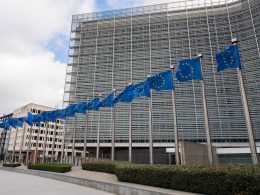
The anniversary coincides with an ongoing review of the European Union Emissions Trading System (EU ETS). Proposed European Union amendments would expand the EU ETS extra-territorially to flights operating within a 5,000-kilometre radius of the EU, alongside creating mechanisms to develop bilateral carbon-pricing arrangements with third-party nations.
IATA’s revised economic analysis indicates that extending the EU ETS scope would increase compliance costs for air carriers by 40 per cent, totaling €280 billion between 2027 and 2040.
Key policy recommendations submitted by IATA to European lawmakers include:
- Multilateral framework protection: Retaining CORSIA as the sole global market-based measure for international flights, while removing proposed “EU ETS as a Service” mechanisms that foster fragmented regional carbon pricing.
- SAF production support: Accelerating and expanding Sustainable Aviation Fuel (SAF) allowance mechanisms immediately, alongside eliminating geographical production restrictions on compliant SAF feedstocks.
- Revenue ringfencing: Reinvesting ETS revenues generated by the aviation sector directly into SAF production capacity, airport infrastructure, and clean technology development within Europe.
Marie Owens Thomsen, Senior Vice President Sustainability and Chief Economist at IATA, stated that CORSIA provides a unified framework to channel climate finance without fragmenting international transport networks.
Thomas Reynaert, Senior Vice President External Affairs at IATA, added that European competitiveness and decarbonization targets are better served by directing industry revenues into fuel transition infrastructure rather than compounding extra-territorial compliance costs.