



Global confectionery giant Mars, Incorporated has begun integrating traceable natural menthol from its Shubh Mint initiative in India into its European chewing gum manufacturing operations, starting with factories in the UK and Poland.
The move aims to address supply risks tied to natural menthol, approximately 80 per cent of which is produced in Uttar Pradesh, India. The region’s mint farming operations have faced ongoing pressures from climate volatility, declining crop yields, and rising input costs. Despite the widespread market availability of synthetic alternatives, Mars chose to invest directly in natural mint supply chain resilience.
Launched in 2017 in partnership with implementation partner Tanager, the Shubh Mint program began as a pilot testing climate-smart practices, improved plant spacing, efficient irrigation systems, and optimized fertiliser management on quarter-acre demonstration plots.
The initiative has since expanded into a wider community framework, establishing Farmer Producer Companies and local Self-Help Groups. According to program figures:
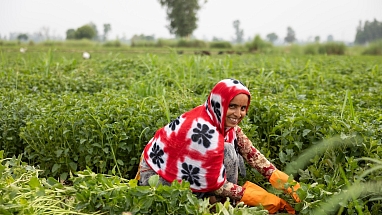
- Farmer Income and Productivity: Over 24,000 farmers have participated, more than doubling their income from mint crops while reducing farm production costs by 20 per cent through improved efficiency.
- Women’s economic empowerment: More than 8,500 women have received training in climate-smart agricultural techniques. Over 1,000 women have started independent small businesses, including retail outlets, tailoring services, and dairy ventures, while more than 4,500 have engaged in financial literacy programs through local self-help networks.
“Before the program started, many mint farming households were struggling to remain profitable. Through Mars’ investment, farmers now have access to the knowledge, practices and inputs that have significantly improved their profitability,” said Joseph Boulier, Managing Director of Food Systems at Tanager.
“The most meaningful impact of Shubh is seeing women who once identified themselves with a thumbprint now proudly signing their own names,” noted Meenal Bahirwani, Sustainable Sourcing Lead at Mars Snacking. “That simple change reflects something far greater: confidence, agency and the belief that they can shape their own futures.”
Following its commercial integration into European operations, Mars plans to transition the initiative toward a “full-farm” model. This updated approach will apply climate-smart agricultural techniques across all crops grown by participating households, rather than mint alone, to diversify farm incomes and build year-round financial resilience.
“What began as a response to a single, vulnerable ingredient has become a long-term commitment and a replicable blueprint for transforming agricultural systems and empowering communities,” stated Sam de Frates, Vice President of Commercial and Sustainability at Mars Snacking Europe and Central Eurasia.