






Singapore Exchange (SGX Group) and digital sustainability platform Gprnt have announced a partnership to upgrade the capabilities of the ESGenome disclosure portal. The collaboration integrates Gprnt’s nationwide utility to assist SGX-listed companies in meeting regulatory requirements for Climate-Related Disclosures (CRD) based on the International Sustainability Standards Board (ISSB) framework, Scope 3 emissions reporting, and corporate transition planning.
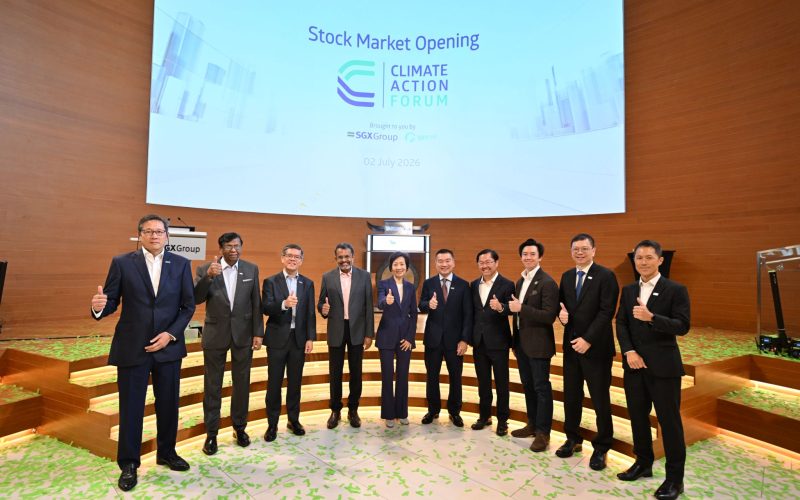
The initiative was announced at the SGX Group-Gprnt Climate Action Forum, attended by Grace Fu, Minister for Sustainability and the Environment and Minister-in-charge of Trade Relations. The partnership aims to establish a shared digital infrastructure to improve connectivity across Singapore’s sustainability ecosystem, facilitating data sharing for supplier engagement, procurement, and green financing.
Following a total migration to the Gprnt platform, ESGenome will introduce several system upgrades. The portal now features CRD modules designed alongside government agencies to assist companies with mandatory reporting obligations through structured workflows. Additionally, automated calculation tools for Scope 1 and Scope 2 emissions have been integrated using verified government data. Future updates will include artificial intelligence tools to assist with disclosure drafting, climate risk assessments, and target setting.
The initiative is supported by the Council for a Competitive Climate Transition (C3T), which will provide SGX-listed companies with data on climate risks, transition pathways, and sectoral benchmarks. The council is encouraging larger listed firms to act as anchor enterprises within the national Green 100 movement to help supply chains adopt basic sustainability reporting. This involvement is intended to improve access to primary data required for complex Scope 3 value-chain reporting.
Chan Kum Kong, Head of Capital Market Development at SGX Group, stated that investors increasingly require transparency regarding how climate-related risks and opportunities are monitored, noting that larger public companies play a significant role in lifting capabilities across their value chains.
Kok Ping Soon, Co-Chair of the C3T, highlighted data from the Singapore Business Federation’s National Business Survey, which indicated that while half of local businesses expect climate risks to impact operations, 56 per cent of small and medium-sized enterprises (SMEs) have not yet begun sustainability reporting, and 92 per cent lack dedicated sustainability personnel.
Lionel Wong, Chief Executive Officer of Gprnt, noted that the platform has transitioned from an administrative tool into a common infrastructure for nationwide disclosures, aimed at reducing fragmentation in environmental, social, and governance (ESG) reporting for companies of all sizes.