




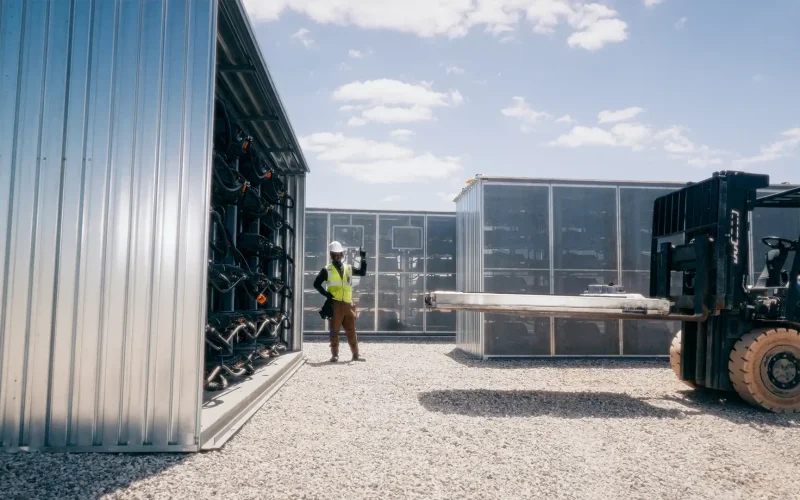
Autonomous driving technology company Waymo, formerly the Google self-driving car project, has launched an electric vehicle battery repurposing programme in partnership with B2U Storage Solutions, aiming to convert retired batteries from its driverless fleet into grid-scale energy storage systems.
The collaboration is designed to divert batteries from immediate recycling, extending their lifecycle by deploying them as stationary energy storage in key operational markets, primarily California and Texas.
B2U Storage Solutions will utilise its patented technology to integrate the used EV batteries into large-scale storage configurations. These systems are designed to absorb surplus renewable energy generated during off-peak hours and discharge it back into local electricity grids during periods of peak demand.
The initiative arrives as grid operators face growing integration challenges. California currently averages 6.1 hours of 100% clean power daily, whilst Texas continues to expand its utility-scale solar capacity. The deployment of increased battery storage is widely seen as critical to balancing intermittent renewable output with community energy needs.
Adam Lenz, Head of Sustainability & Environment at Waymo, stated that the company’s shared fleet of EVs provides a massive opportunity to support the growth of clean energy on the electricity grid whilst expanding the circular economy. He added that the partnership allows the company to repurpose batteries for local grid storage, ensuring they continue to provide economic and environmental value long after retiring from the road.
The agreement is intended to eventually deploy hundreds of megawatts of storage capacity across the power grids serving Waymo’s primary autonomous vehicle service areas.
Freeman Hall, Chief Executive Officer of B2U Storage Solutions, remarked that the agreement marks a significant milestone in B2U’s mission to provide integrated repurposing services to the automotive industry. He noted that extending the use of the batteries as grid storage monetises their full remaining potential whilst providing crucial stability to the power grid as energy demand grows.