









The BMW Group has systematically extended its holistic sustainability strategy to the new BMW X5 line-up, implementing comprehensive measures to minimise the premium SUV’s carbon footprint across its entire lifecycle. The initiative targets emissions reductions at every stage, spanning the raw material supply chain, vehicle manufacturing, the active driving phase, and eventual recycling.
During the initial product development process, targeted decarbonisation measures successfully reduced the carbon emissions of the BMW X5 by approximately 40 per cent. A key driver in this achievement is the increased deployment of carbon-reduced flat steel for the vehicle body. Around half of the flat steel utilised is electric arc furnace steel, which incorporates a high proportion of secondary material and is manufactured using renewable energy via long-standing partnerships with North American suppliers.
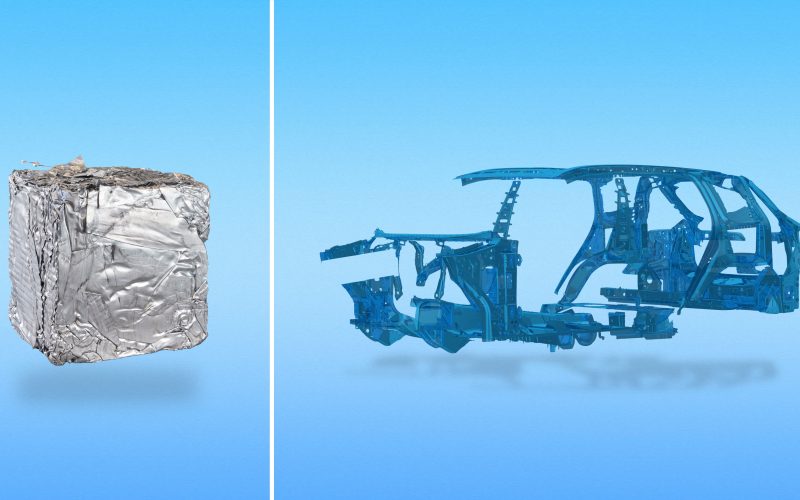
The German carmaker has also intensified its use of secondary raw materials within heavy-duty components. This includes aluminium suspension parts, such as wheel rims and brake callipers, produced using green energy for both electrolysis and production. Notably, the aluminium for the doors contains 35 per cent recycled and closed-loop material from the Spartanburg press shop, whilst the headliner fabric yarn relies entirely on recycled PET. For the battery-electric BMW iX5 60 xDrive variant, secondary raw materials account for roughly a third of the total vehicle weight, translating to 940 kilograms of repurposed material.
The fully electric flagship features advanced Gen6 battery cells, which achieve a 28 per cent reduction in emissions per watt-hour compared to the previous generation. This was achieved by utilising a high proportion of secondary cobalt, lithium, and nickel, alongside renewable energy during cell manufacturing.
On the road, BMW’s EfficientDynamics package optimises energy management through enhanced aerodynamics and lightweight construction. The electric iX5 integrates the newly developed “Heart of Joy” driving stack, which increases deceleration energy recuperation to improve overall efficiency. Consequently, depending on charging sources and mileage, the iX5 is projected to achieve a net carbon advantage over conventional internal combustion models within just one to two years of operation.
Manufacturing takes place at Plant Spartanburg, the group’s largest production facility, which runs entirely on external renewable electricity and slashed energy consumption per vehicle by 66 per cent between 2006 and 2025. Accompanying the series launch, BMW will publicly release a Product Carbon Footprint report validated by the German Technical Inspection Association (TÜV) to maintain full transparency regarding lifecycle emissions.