






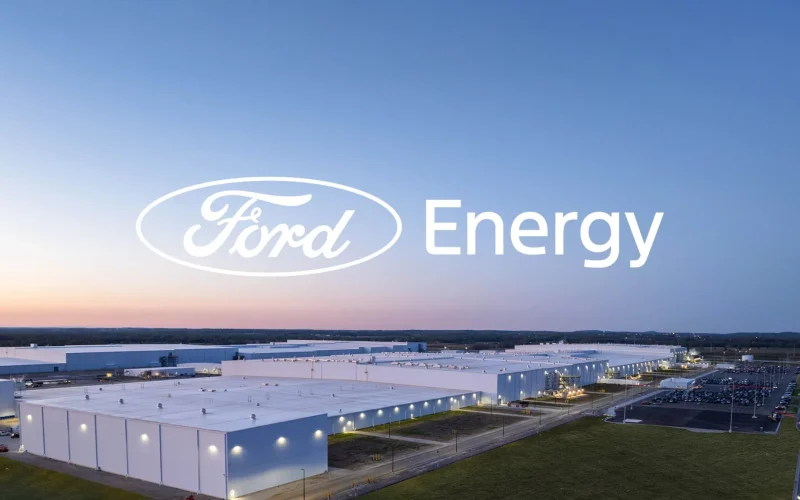
Ford Motor Company has officially introduced Ford Energy, a wholly owned subsidiary dedicated to manufacturing and deploying utility-scale battery energy storage systems (BESS). The move marks a significant pivot for the 122-year-old automaker as it leverages its industrial expertise to address the surging demand for domestic energy infrastructure.
Ford has committed approximately $2 billion to establish the business, which is now in “full execution mode.” The company aims to deploy at least 20 GWh of storage capacity annually, with the first customer deliveries scheduled for late 2027.
To ensure speed and scale, Ford Energy is repurposing existing manufacturing capacity in Glendale, Kentucky. The facility will handle the full production lifecycle, from battery cell manufacturing and electrode coil production to the final assembly of modules and containerised units.
The manufacturing strategy is specifically designed to align with U.S. regulatory standards, including Investment Tax Credit (ITC) requirements and domestic content standards for grid-scale storage. By focusing on U.S.-assembled systems, Ford Energy aims to provide a “bankable” solution for utilities, data centres, and industrial customers seeking to de-risk their supply chains.
The subsidiary’s flagship product is the Ford Energy DC Block, a standardised 20-foot containerised system built around 512 Ah Lithium Iron Phosphate (LFP) prismatic cells. The system will be available in two configurations:
- FE-250: A two-hour duration system.
- FE-450: A four-hour duration system.
Both models feature liquid-cooled thermal management and integrated battery management systems, designed for a 20-year performance life. Ford intends to position itself as a reliable, long-term partner capable of honouring multi-decade warranties in a market currently facing supply gaps.
The launch comes at a critical juncture for the U.S. energy market. The rapid expansion of AI-driven data centres, combined with the integration of intermittent renewable energy, has created an urgent need for dispatchable storage to ensure grid stability.
“Utilities and developers need storage systems they can finance, insure and depend on for decades,” the company stated, highlighting its century-long history of industrial-scale manufacturing as a key competitive advantage.
By entering the BESS market, Ford is diversifying its portfolio beyond the automotive sector, targeting the essential infrastructure required for the global energy transition and the continued electrification of the American economy.