







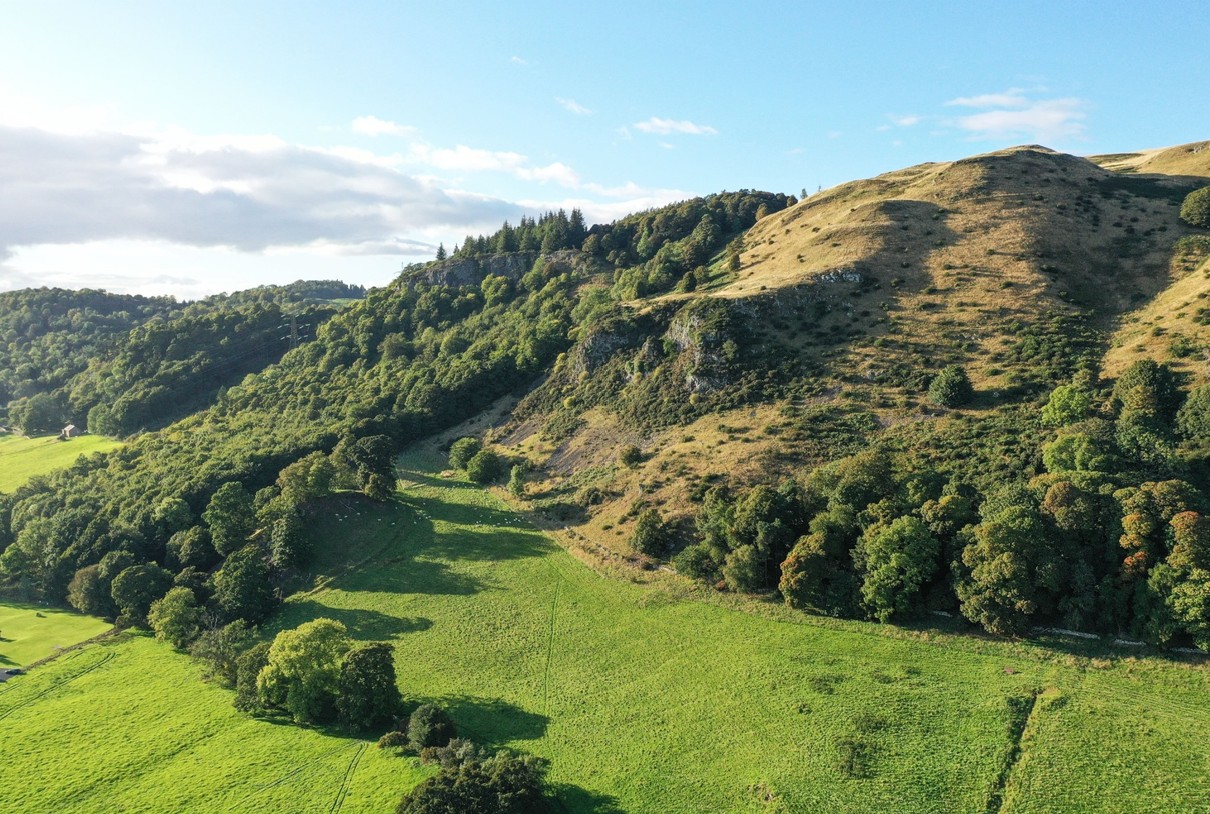
Edinburgh Airport has become the first publicly named Pioneer partner supporting IMPACT, a new corporate nature recovery programme from The Future Forest Company designed to connect businesses with credible, evidence-led restoration and long-term stewardship across UK landscapes.
The announcement comes after the UK experienced a record-breaking June heatwave, sharpening the focus on how landscapes need to be prepared for hotter, drier conditions and the growing risk of wildfire.
With 12 sites covering nearly 3,000 hectares and more than 1.5 million native trees planted to date, The Future Forest Company is focused on proactive land management. Alongside restoring landscapes at scale, its work includes monitoring ecological and human pressures, managing vegetation competition and creating more varied habitats that can help make landscapes more resilient to wildfire.
Businesses see nature recovery in action
The launch follows The Future Forest Company’s recent Pioneer Day at Dumyat, one of its Scottish restoration sites on the western edge of the Ochil Hills near Stirling. Edinburgh Airport joined businesses from across aviation, insurance, architecture, fashion and other sectors for a field-based exploration of what long-term woodland, peatland and habitat recovery involves in practice, including restoration activity, monitoring, ranger work and data-led land management.
Gill Chapple, CEO at The Future Forest Company, said: “Businesses are increasingly looking for credible ways to support nature recovery, but they need to know that their support is connected to real work, real landscapes and real evidence.”
“Historically, nature restoration has been funded by large organisations or wealthy individuals. If we’re serious about reversing biodiversity loss and tackling climate change, we need to give businesses of all shapes and sizes a pathway to contribute to nature restoration at a level that is local, affordable, credible, and supported by reported outcomes. IMPACT has been created to make that possible..”
Jessica Briggs, Head of Sustainability at Edinburgh Airport, commented: “As an airport, we recognise the important role we play in helping to shape a sustainable future for us, Scotland and the communities around us. We know that supporting credible, local nature recovery is one of the ways we can do that, which is why we’re pleased to support IMPACT – a practical, evidence-led project rooted in long-term stewardship.”
New data shows why active stewardship matters
It comes as new Spring 2026 data, collected by The Future Forest Company in Dumyat, show why that approach matters. The findings, based on a 480-hectare hillside estate, show that 48% of mapped land had at least one recorded ecological or human pressure.
The most commonly recorded pressure was vegetation competition, with gorse or bracken growth recorded across 42% of the mapped area. While both species are native, they can behave like invasive species when left unmanaged, outcompeting young trees and other vegetation and increasing the fuel load in dry conditions.
Other recorded pressures included deer observations, damage to built or natural assets, such as fences, paths, or gates, and a range of human behaviours affecting nature recovery. The monitoring data directly informs stewardship efforts by rangers across the site.
Dan Maltby, Chief Operating Officer at The Future Forest Company, added: “The data shows that nature recovery is rarely held back by one single issue. It is shaped by a changing mix of pressures that shift with the seasons, the weather and how people are using the land.”
“What we have built at Dumyat is not a one-off survey. It is a repeatable seasonal framework that translates field evidence into operational decisions, such as where to deploy interventions, what to repair and what to leave alone. That is the model we are now rolling out across the portfolio. The goal is to understand what is happening on the ground and respond in a targeted way, rather than spreading effort evenly across a landscape that is anything but even.”
“We also monitor human activity as part of this, because people are part of the landscape. How a site is accessed, how it is used, and what behaviours we observe shape what recovery is possible, just as much as vegetation or deer do. If we want landscapes to become genuinely more resilient, including to hotter and drier conditions, that has to be part of the picture.”
Nature recovery moves up the corporate agenda
Dumyat is one of FFC’s most mature monitoring sites and will act as an early focal point for IMPACT. The approach is now being rolled out across FFC’s wider portfolio of 12 managed UK sites, including 11 in Scotland and one in Yorkshire, covering peatland, woodland, grassland and wetland habitats.
The programme has been created as corporate nature action moves into a more demanding phase. Companies are facing growing pressure to substantiate environmental claims, while sustainability, legal, finance and reporting teams increasingly need clearer evidence of what is being funded and what impact it is having.
- The Future Forest Company
-